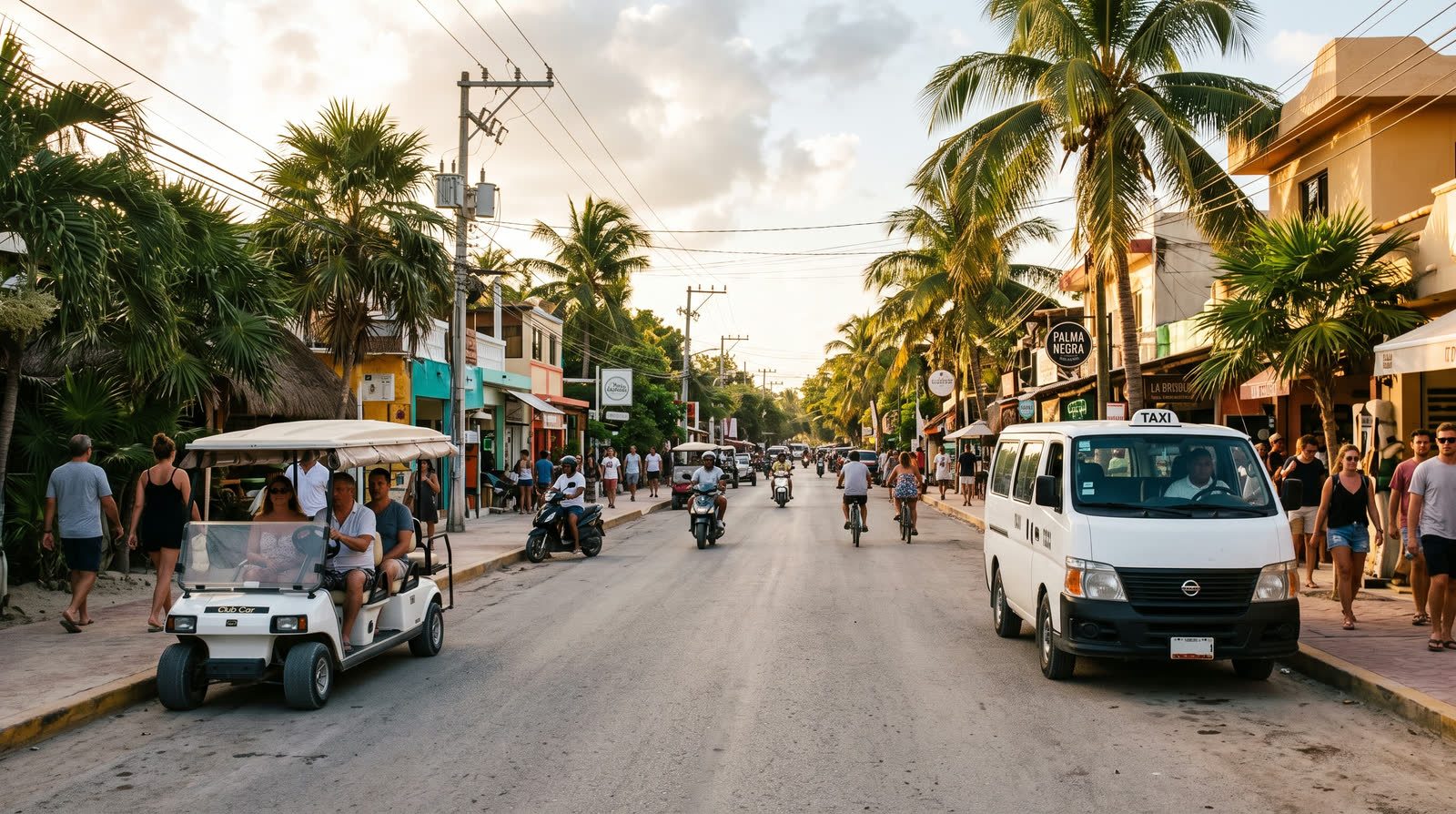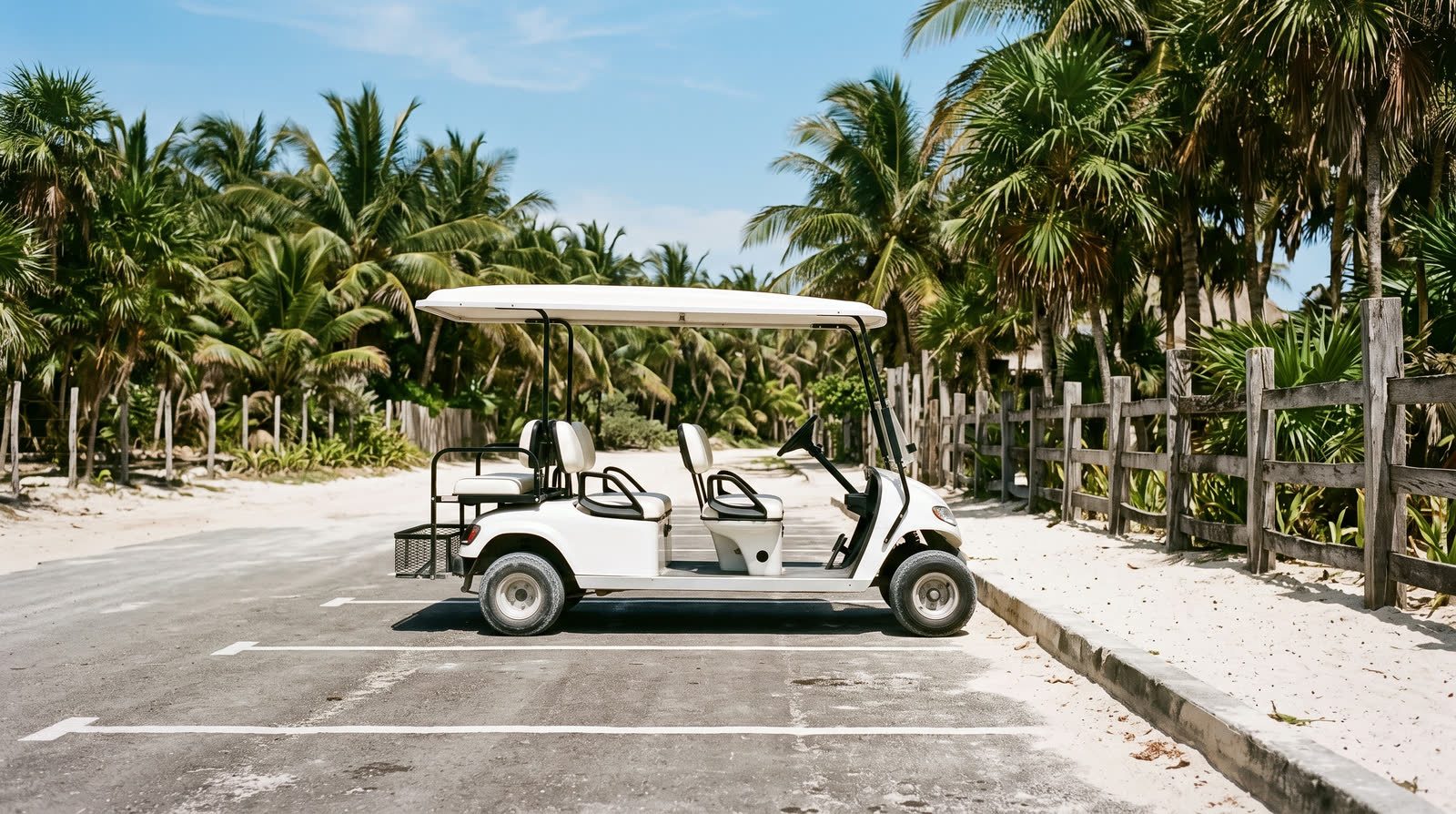
Driving a golf cart in Tulum is easy — it is slow, it has no gears and it parks in any gap — but four things are worth knowing before you set off: where you can drive, where you cannot, how to leave it parked, and who pays a fine. Spoiler on the last one: whoever was driving, always.
Who is allowed to drive it
Anyone over 18 with a valid licence from any country, and named in the contract. That last part is not bureaucracy: if someone outside the contract drives, the cover stops applying. If two of you will take turns, add the extra driver when you book and the problem disappears.
Where yes and where no
The cart is for flat ground and paved roads, inside the zone named in your contract. Outside that zone, no. And federal highway 307 is out: not as a commercial restriction, but because a slow vehicle has no business on a road people drive at a hundred.
Inside Tulum that still leaves practically everything you will want to do: the town, Aldea Zama, La Veleta, the whole beach road and the Cobá road where the nearby cenotes are.
Speed bumps, sand and common sense
Three warnings that save trouble:
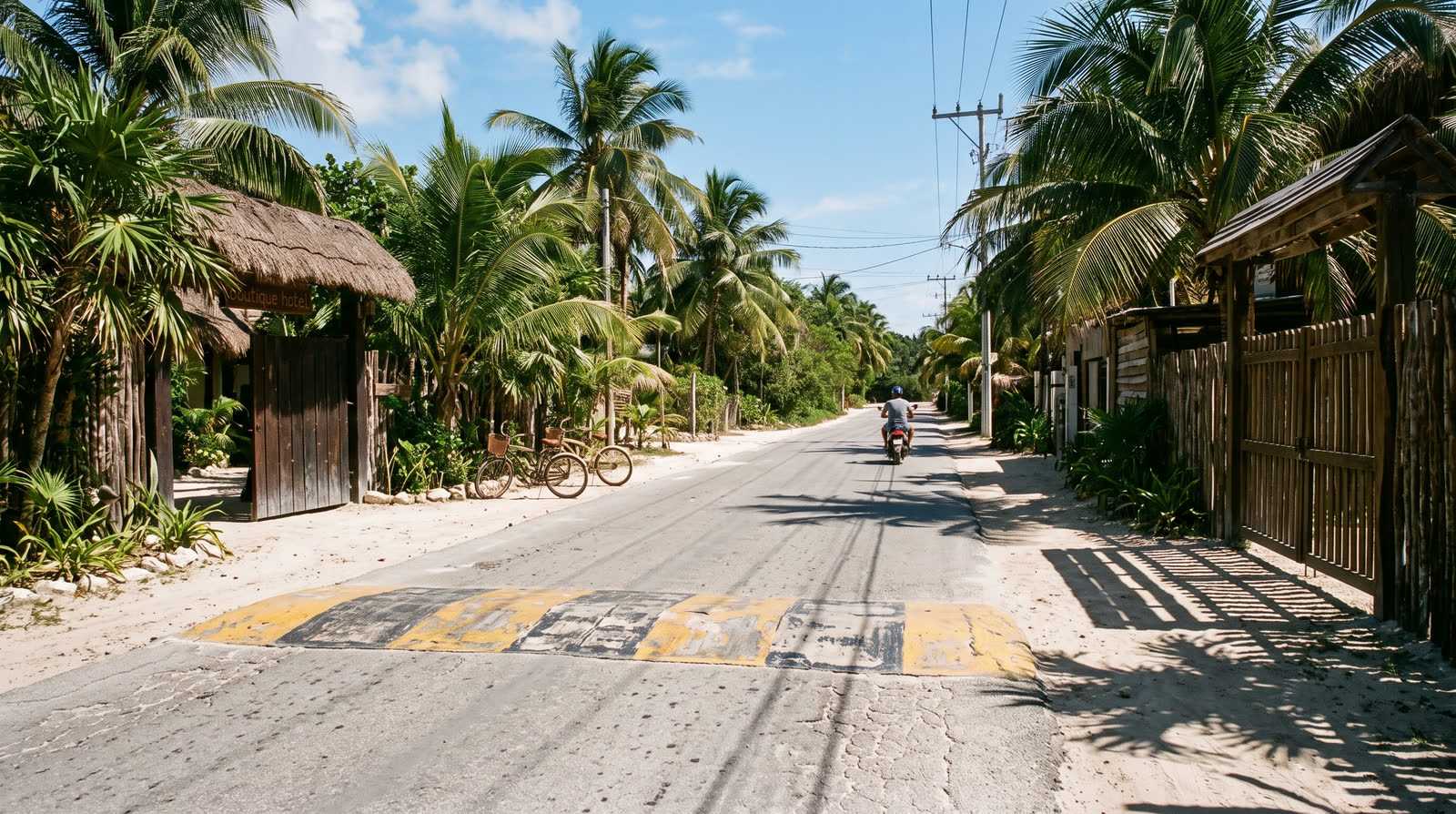
- Speed bumps. They are everywhere and some are unpainted. Take them slowly — a bump taken fast with four people and a cool box is felt by everyone.
- Soft sand. It is the one surface that can genuinely strand you, and being pulled out of the sand is not covered by any protection level. If the ground looks loose, do not go in.
- Rain. The cart is open. In the wet season a twenty-minute storm soaks the whole seat; if you are parking outside and see clouds, put the curtains down if it has them.
Parking without a ticket
The rule is the same as for a car: where it is not prohibited, and without blocking anyone. What changes is that the cart fits into small gaps, and that is where the temptation to leave it "just a second" across a driveway or on a pavement comes from.
In the hotel zone there are stretches with marked parking and stretches where stopping is not allowed. In town the streets are full and the good gap is usually one street further along. Thirty metres of walking is worth it.
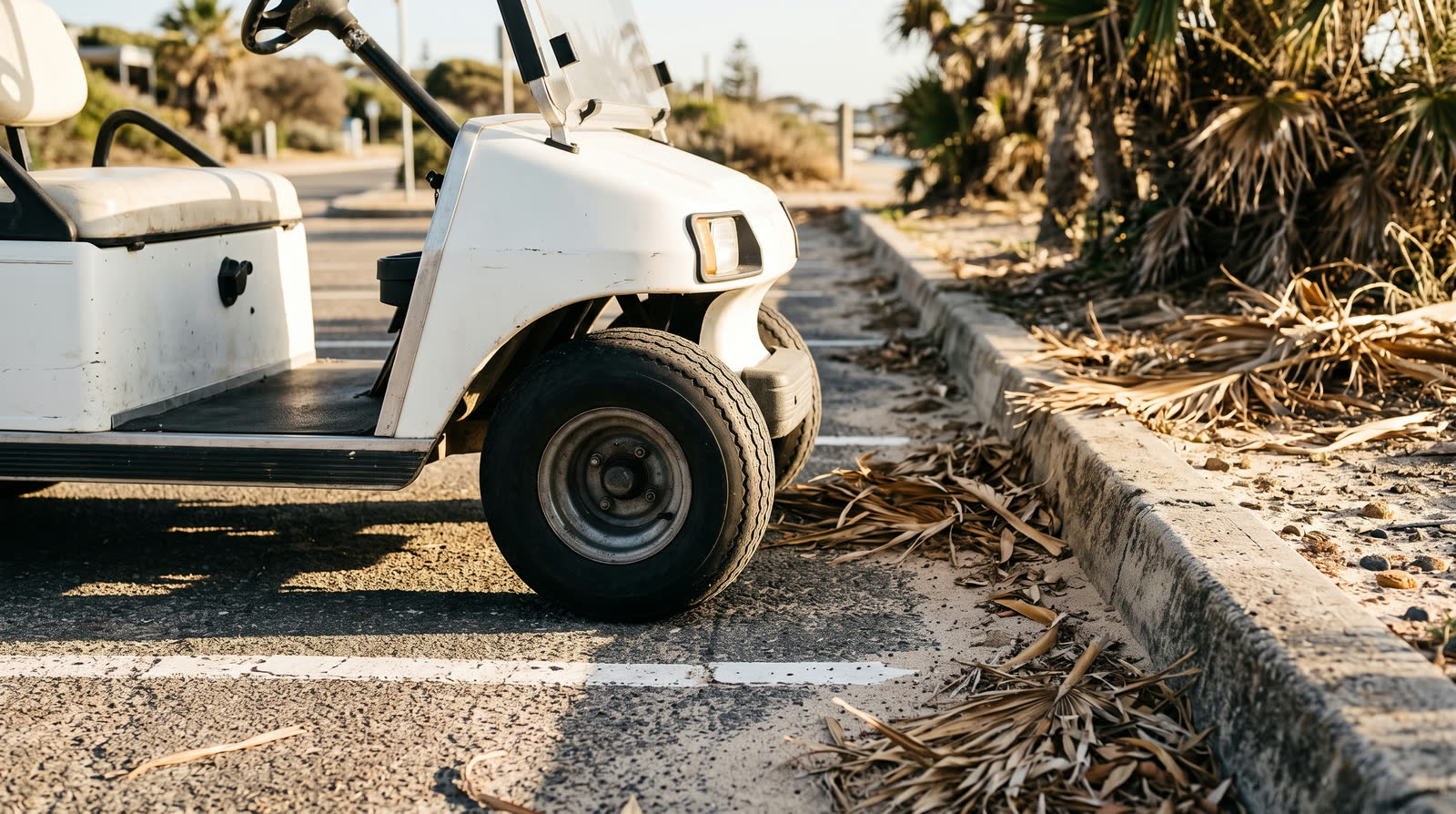
Fines are never covered. Not with 90% cover, not with 100%, not with Defensa a Defensa. They are paid by whoever was driving. The same goes for legal liability arising from an incident.
At night
You can drive at night, and the tourist areas are busy until late. Three conditions: stick to the main roads, keep your lights on, and stay off the federal highway. The sand streets in the residential neighbourhoods have little lighting, so if you are heading back to La Veleta late, take it slowly.
The battery, which is your fuel
It leaves us at 100% and you charge it during the rental, plugged into an ordinary socket where you are staying. Nothing special is needed: plug it in overnight and it is ready in the morning. The one thing not to do is leave it near empty "for tomorrow" — the battery does not recover on its own.
If something happens
If you have an accident, leave the cart where it is and call us. Do not move it and do not arrange anything with anyone yourself. If you took Defensa a Defensa, you also have recovery, towing and a replacement cart so the trip can continue; with the other two levels the cover protects the vehicle but does not come and get you. It is all set out in the FAQ and in how the rental works.
Quick questions
Do I need a Mexican licence?
No. A valid licence from any country works, and no international permit is needed.
Can my partner just drive it?
Only if they are registered as an additional driver in the contract.
What if I lose the key?
No protection level covers it and the replacement is charged separately. Tell us as soon as you notice.
Can I reach the cenotes?
The ones on the Cobá road, yes. The ones out on the federal highway, no. We break it down in the cenotes you can reach by cart.
For the first day
Spend the first ten minutes getting used to it on a quiet street before joining the avenue. After that it is as simple as it looks. If you have not booked yet, check your dates.